download (36)

He Left His Affairs to the Only One – Allah

He Left His Affairs to the Only One – Allah

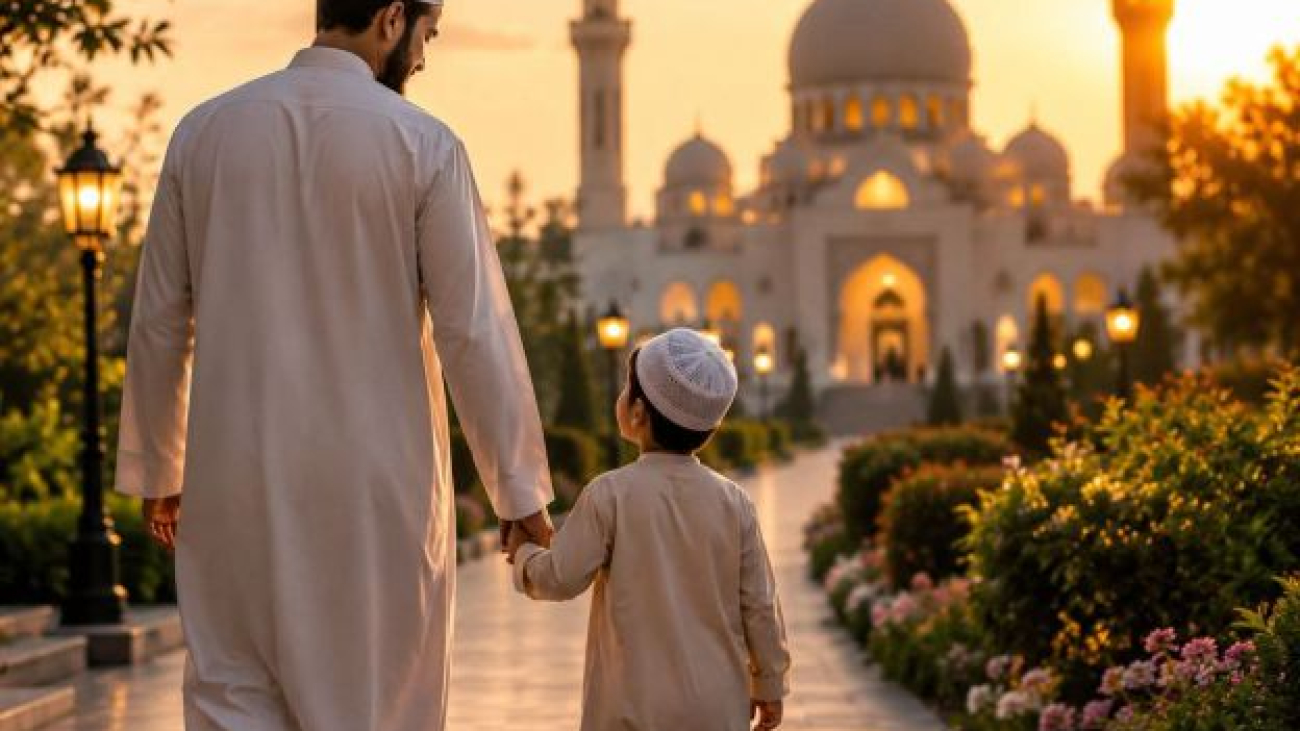
Things were difficult for this family. What they were going through did not resolve overnight. Trials came one after another, and there were moments when the burden seemed heavier than they could carry.

There were questions without immediate answers. There were doors that seemed firmly closed. There were nights filled with worry and days when they simply did not know what would happen next. But he made a decision: he would leave his affairs to Allah.

Not because the problems were small.
Not because he had all the answers.
Not because he could see how everything would work out.

He trusted the One who could see what he could not see. He continued to make duʿāʾ. He continued to do what was within his ability. He took the means available to him, but his heart did not become attached to the means. His heart remained attached to Allah.

Allah says: “And whoever relies upon Allah—then He is sufficient for him.” — Qur’an 65:3

Sometimes, tawakkul means going to sleep without knowing how tomorrow will unfold, yet waking up believing that Allah is already in control of it. Sometimes, it means crying while making duʿāʾ but refusing to believe that your tears are unseen. Sometimes, it means watching a situation take longer than you expected and reminding yourself:

“Allah has not forgotten me. His delay is not His abandonment.”

And sometimes, the greatest test is not the hardship itself, but learning to remain certain of Allah while the hardship continues. Eventually, what seemed impossible began to change. The affairs that had troubled the family for so long began to find their way toward resolution—not necessarily in the way they had imagined, but in the way Allah had decreed.

That is the beauty of tawakkul.

You do your part. You make the duʿāʾ. You take the means. Then you leave the outcome to Allah.
Because when you have placed your affairs in the hands of Al-Wakīl, the Best Disposer of Affairs, you do not need to know every detail of tomorrow.
You only need to know Who holds tomorrow.

May Allah ease every household going through a prolonged trial. May He replace anxiety with tranquility, hardship with ease, confusion with clarity, and unanswered prayers with outcomes better than we imagined.

Trust Allah. Keep going. Keep making duʿāʾ. Your story is not over.

Umm Sumayyah Mai

download (15)

Cuddling Takes Away Anxiety

Cuddling Takes Away Anxiety

Marriage is meant to be a source of peace, comfort, and tranquility. Allah says: “And among His signs is that He created for you spouses from among yourselves so that you may find tranquility in them. And He placed between you affection and mercy.” (Qur’an 30:21)

One of the simplest ways to express that affection is through warm, loving physical closeness. A gentle embrace, holding hands, or cuddling before sleep reminds your spouse, “You are safe with me. You are not alone.”

After a long day of work, responsibilities, and life’s many challenges, do not let your bedroom become another place of silence and distance. Let it be a sanctuary of love. Spend a few moments talking, smiling, making du’ā for one another, and resting in each other’s arms. Those little moments often heal wounds that words cannot.

The Prophet ﷺ was the best example of kindness and affection toward his wives. He showed love through his words, actions, and gentle companionship. This teaches us that tenderness is not a sign of weakness; it is part of the beautiful Sunnah.

While cuddling alone will not solve every problem in a marriage, it strengthens emotional bonds, eases tension, and reminds both spouses that they are partners facing life’s trials together.

Sometimes, the greatest comfort is not found in long conversations, but in the quiet reassurance of being close to the one Allah has chosen for you.
So tonight, if Allah has blessed you with a spouse, don’t end the day with unresolved anger or unnecessary distance. Forgive quickly, speak kindly, and if possible, sleep close to one another. A loving embrace may calm a worried heart more than you realize.

May Allah place abundant love, mercy, tranquility, and barakah in every Muslim home, strengthen the bonds between spouses, and make our marriages a means of drawing closer to Him. Āmīn.

Umm Sumayyah Mai

download (11)

Pray for Your Children, Never Give Up on Them

Pray for Your Children, Never Give Up on Them

Some children seem easy to raise, and there are those whose journey is more challenging. Some bring comfort to their parents, while others test their parents’ patience, resilience, and faith.

Allah reminds us: “Your wealth and your children are, but a trial, and with Allah is a great reward.”
(Qur’an 64:15)

Every child is a trust from Allah, but every child is also a test in one way or another. The test may not always be a child’s disobedience. Sometimes it is illness, hardship, delayed success, difficult choices, or the constant worry a parent carries in their heart.

When your child struggles, do not allow frustration to replace duʿāʾ. Do not let disappointment silence your prayers. Continue to call upon Allah day and night, for hearts are in His Hands alone.

Remember the beautiful supplication of the righteous: “My Lord, make me an establisher of prayer, and [many] from my descendants. Our Lord, and accept my supplication.” (Qur’an 14:40)

And Allah praises those who pray: “Our Lord! Grant us from among our spouses and our offspring comfort to our eyes and make us leaders for the righteous.” (Qur’an 25:74)

Never label your child as a lost cause. As long as they are alive, the door of guidance remains open. Many people who once strayed became among the most righteous after Allah guided them.

Keep teaching. Keep advising with wisdom. Keep showing love. Above all, keep praying. A sincere duʿāʾ from a parent may be the very reason Allah transforms a child’s life.

May Allah make our children righteous, protect them from every evil, guide those who have gone astray, and make them a source of joy in this life and the next. Āmīn.

Umm Sumayyah Mai

Teaching children Akhlaaq with free resources! (1)

Corrections Shape You!

Corrections Shape You!

Our parents play a significant role in shaping who we become. Loving correction is one of the greatest gifts they can give us. It refines our character, strengthens our values, and prepares us to become better than they are.

Good parents do not ignore what is wrong. They lovingly correct disobedience, arrogance, disrespect, dishonesty, laziness, and other harmful attitudes—not because they enjoy pointing out faults, but because they genuinely care about your future.

Do not allow your friends or social media to define how you view your parents. Never assume they hate you simply because they correct you. Do not see them as obstacles to your freedom or as burdens standing in the way of your happiness.

No one will ever love you quite like sincere parents do. Friends may come and go, but parents continue to pray for you, sacrifice for you, and desire the very best for you. Wise parents do not leave their children without guidance, correction, or counsel.

When you humbly listen to their advice and reflect on their words, you grow into a person of wisdom, character, and integrity. Those who accept correction today often avoid regret tomorrow.

Dear young brothers and sisters, do not be carried away by peer pressure or the influence of wrong companions. Choose friends who encourage you to obey Allah, honour your parents, and strive for excellence in this life and the Hereafter.

Your parents love and appreciate you more than you may realize. They may not always express it perfectly, but their corrections are often a reflection of their deep concern for your well-being. So, whenever they correct you, listen with an open heart. Their guidance today may become one of your greatest blessings tomorrow.

“And lower to them the wing of humility out of mercy and say, ‘My Lord, have mercy upon them as they brought me up when I was small.'” (Qur’an 17:24)

May Allah grant our youth hearts that accept sincere advice, bless our parents for their sacrifices, and make our homes places of mercy, love, and righteous guidance. Āmīn.

Umm Sumayyah Mai

DUA SEEKING REFUGE FROM CALAMITIES, MISERY, ANGUISH, DEPRESSION, AN EVIL END & BAD FATE

Your Time is Coming!

Your Time is Coming!

Perhaps you’ve watched others celebrate while you quietly waited. You’ve prayed. You’ve cried. You’ve worked hard. You’ve trusted Allah, yet your breakthrough seems delayed.

Do not mistake delay for denial.

Allah is never late. He is preparing the right moment, the right place, and the right outcome for you. What He has written for you will never miss you, and what misses you was never meant for you.

Your responsibility is not to control the timing but to remain steadfast in faith, sincere in worship, and patient in obedience. Keep making du’ā. Keep striving. Keep trusting. Keep hoping.

The doors that Allah opens cannot be closed by anyone, and the blessings He withholds are only delayed by His perfect wisdom.

Your time is coming—not because the world says so, but because Allah’s decree is always perfect.
So don’t give up just before your chapter changes.

“And whoever puts their trust in Allah, then He is sufficient for them.” (Qur’an 65:3)

May Allah bring your heart peace, answer your sincere supplications, and bless you with what is best at the most perfect time. Āmīn.

MajmolQueen Charitable Foundation

download (37)

Friday: Tawḥīd & Tawakkul

Friday: Tawḥīd & Tawakkul

While Away from Ṣalāh!

One of the unique experiences of Muslim women is the temporary pause from Ṣalāh during menstruation. It is a period Allah, in His infinite wisdom and mercy, has exempted them from prayer. This is not a punishment, nor does it reduce a woman’s closeness to Allah.

Yet, many sisters quietly admit that after several days away from Ṣalāh, returning to the prayer mat can feel more difficult than expected. The heart becomes less attached, routines change, and Shayṭān takes advantage of the gap.

This is where Tawḥīd and Tawakkul become essential.

Tawḥīd reminds us that Allah alone deserves our worship, love, hope, and complete devotion. Even when we cannot pray, our relationship with Him does not stop.

Tawakkul reminds us to trust Allah completely. Trust that He knows your condition, accepts your excuse, rewards your patience, and welcomes you back the moment you are purified.

While away from Ṣalāh, stay connected to Allah by:

Making abundant du’ā.
Engaging in dhikr.
Reading or listening to the Qur’an according to the scholarly opinion you follow.
Seeking beneficial Islamic knowledge.
Sending ṣalāh upon the Prophet ﷺ.
Renewing your intention to return eagerly to prayer.

Allah says: “And whoever relies upon Allah—then He is sufficient for him.” (Qur’an 65:3)

Remember, your pause from Ṣalāh is temporary, but your connection with Allah should remain continuous. Let every day of your exemption increase your longing to stand before Him again.

May Allah keep our hearts firm upon Tawḥīd, strengthen our Tawakkul, and make us among those who hasten back to His worship with love. Āmīn.

– Umm Sumayyah Mai

WhatsApp Image 2026-07-30 at 11.06.47 AM

Marriage Is Deeper Than What the Eyes Can See

Marriage Is Deeper Than What the Eyes Can See

What people choose to share with the world is often only a carefully selected moment—not the complete story. Behind the beautiful family photographs, matching outfits, luxurious vacations, sparkling wedding rings, designer handbags, expensive cars, and perfectly decorated homes may be silent tears, difficult conversations, unanswered prayers, loneliness, financial struggles, emotional pain, or battles that no camera will ever capture.

The danger begins when we compare our reality with someone else’s highlights.

We start believing that appearances measure happiness. We become dissatisfied with the blessings Allah has already placed in our own homes because we assume someone else’s life is free of hardship. In chasing an image, we neglect the beauty that already exists within our own marriage.

Comparison is one of the quickest ways to rob the heart of gratitude.

Allah never asked us to live another family’s story. He asked us to be grateful for His favors and to strive for excellence within the home He has entrusted to us.

Perhaps your spouse does not buy extravagant gifts, but they pray for you.

Perhaps your home is not the most luxurious, but it is filled with peace and tranquility.

Perhaps your marriage is not perfect, but it is built on sincerity, mercy, forgiveness, and a shared desire to please Allah.

These are treasures that cannot be displayed on social media.

Before admiring what appears beautiful from a distance, remember that every marriage carries its own tests. Instead of longing for another person’s life, nurture your own. Water your own garden. Speak kindly to your spouse. Overlook their shortcomings. Celebrate the countless blessings that have become so familiar that you barely notice them anymore.

A grateful heart sees what comparison cannot.

Today, thank Allah for your spouse—their strengths, their efforts, their presence, and even the lessons learned through your differences. Perfection belongs only to Allah. But with gratitude, patience, mercy, and sincere effort, an ordinary marriage can become one of life’s greatest blessings.

“If you are grateful, I will surely increase you.” (Qur’an 14:7)

May Allah fill our homes with sakīnah (tranquility), mawaddah (love), and raḥmah (mercy), make us grateful for the blessings He has bestowed upon us, and help us appreciate the good we see in our spouses before longing for what we see in others. Āmīn.

Umm Sumayyah Mai

download

The Waiting Period

The Waiting Period

One of the most difficult tests of faith is not making du‘ā—it is waiting for its answer. As you turn to Allah in prayer, remember that every du‘ā has its appointed time. Some prayers are answered immediately. Others take weeks, months, or even years. But no sincere supplication is ever lost with Allah.

ʿUmar ibn al-Khaṭṭāb (رضي الله عنه) beautifully said:
“I am not concerned about whether my supplication will be answered. Rather, I am concerned about making supplication itself. For when Allah inspires me to make du‘ā, the answer accompanies it.”

So while you wait, keep your heart attached to Allah.
Do not stop making du‘ā.
Do not stop hoping.
Do not stop trusting.

Allah has heard every word you have uttered. He has seen every tear you have shed. He knows every pain you have hidden from the world. Nothing about your situation is unknown to Him.

Perhaps you are:
A married couple yearning for the blessing of a child.
Searching for employment and wondering when your opportunity will come.
Struggling to put food on your family’s table.
Trying to pay your children’s school fees.
Carrying a burden that no one else knows about.

Do not let your delay make you doubt Allah’s mercy. Allah is still above the Throne. His power has not diminished. His mercy has not ceased. His promise has never failed. Your Lord says:

“And when My servants ask you concerning Me, indeed I am near. I respond to the call of the supplicant when he calls upon Me.” (Qur’an 2:186)

If the answer is delayed, it is not because Allah has forgotten you. Rather, He is preparing what is best for you, at the best time, according to His perfect wisdom. So continue knocking on the door of Ar-Raḥmān. One day, by His permission, that door will open in a way that will make every moment of waiting worthwhile.

Your du‘ā has been heard.
Your Lord is the Best of Planners.

Keep waiting with patience. Keep asking with certainty. Keep trusting with unwavering tawakkul.
Indeed, with hardship comes ease. (Qur’an 94:5–6)
May Allah answer every sincere du‘ā, replace every hardship with relief, and grant us what is best in this world and the Hereafter. Āmīn.

Umm Sumayyah Mai

maj

WE ARE SUPER PROUD OF YOU, MARYAM YUSUF!

WE ARE SUPER PROUD OF YOU, MARYAM YUSUF!

I am a proud mother of two children who attended Ar-Raheem International College, Ilorin, Kwara State, where they each became a Hafidh and Hafidhah, respectively, after three years. It is deeply disheartening that some people still assume that students—or women who wear the niqab (face veil)—are unintelligent.

I was saddened to see some ignorant individuals attempt to diminish Maryam’s remarkable achievement for reasons best known to them. How can anyone claim to have “removed” her niqab by circulating a random photograph of someone else that clearly does not match hers? Even more disappointing is that such misinformation came from a well-known media outlet.

Maryam Yusuf, Allah has honored you with a success you truly deserve. He has caused your name to be recognized across the world, and we are grateful to Him for this blessing. No one can take away the honor Allah has bestowed upon you. No one can diminish what He has elevated.

As a proud mother, I stand with you, your parents, and the entire Ar-Raheem International School family. You are loved, respected, and cherished.

Thank you for making Islam, the Ummah, and Nigeria proud. May Allah increase you in beneficial knowledge, protect you from every evil, and grant you even greater success in this world and the Hereafter. Āmīn.

— Umm Sumayyah Mai

maj

Raising Children for Jannah

Raising Children for Jannah

YOUR CHILDREN ARE AN AMĀNAH, NOT A COMPETITION

One of the greatest mistakes parents make is focusing more on raising successful children than righteous children. We celebrate high grades, prestigious careers, and worldly achievements. While these are blessings from Allah, they should never come at the expense of our children’s relationship with Him.

The greatest success is not hearing, “My child became a doctor, engineer, or lawyer.” Rather, it is hearing that your child established the prayer, honored their parents, spoke the truth, feared Allah in public and in private, and lived a life that pleased Him.

Allah says: “O you who believe! Protect yourselves and your families from a Fire whose fuel is people and stones…” (Qur’an 66:6). The Prophet ﷺ said: “Each of you is a shepherd, and each of you is responsible for his flock.”(Ṣaḥīḥ al-Bukhārī).

Our children are not entrusted to us merely to prepare them for university, marriage, or a successful career; they are entrusted to us to nurture their growth and development. They are entrusted to us to prepare them for the meeting with Allah.

Teach them to love the Qur’an before they love the world. Teach them to pray before you pressure them to perform. Teach them sincerity before popularity, and good character before recognition.
If they earn this world but lose their faith, we have not truly succeeded. But if they hold firmly to Islam, even through life’s challenges, they have attained the greatest success.

May Allah make our children among the righteous, keep them steadfast upon Islam, protect them from trials, and reunite us with them in Jannatul-Firdaws. Āmīn.

What do you think is the most important quality to nurture in a child today? Share your thoughts in the comments.

#RaisingChildrenForJannah #IslamicParenting #TheMuslimFamilySeries #Quran #Sunnah #ParentingWithPurpose #MuslimParents #FamilyInIslam #Jannah #MajeedahAshimiIdris #MajmolQueenFoundation